You start a load of laundry expecting clean, fresh clothes, only to discover that the detergent is still sitting in the dispenser after the cycle finishes. A washer not dispensing detergent can leave clothing poorly cleaned and make it difficult to determine whether the problem involves the detergent itself or the washing machine.
Detergent buildup, incorrect product usage, insufficient water flow, and malfunctioning dispenser parts can all interfere with normal operation.
Understanding these potential causes can help you recognize what to check and when professional washer repair may be necessary.
Common Reasons for a Washer Not Dispensing Detergent
Most washing machines use incoming water to carry detergent from the dispenser into the wash tub. Some newer models use automatic dispensing systems that measure and release detergent during the selected cycle.
If your washer not dispensing detergent has become an issue, the cause may range from a maintenance issue to a malfunctioning internal component. Here are six common reasons this happens.
1. Detergent Residue Is Blocking the Dispenser
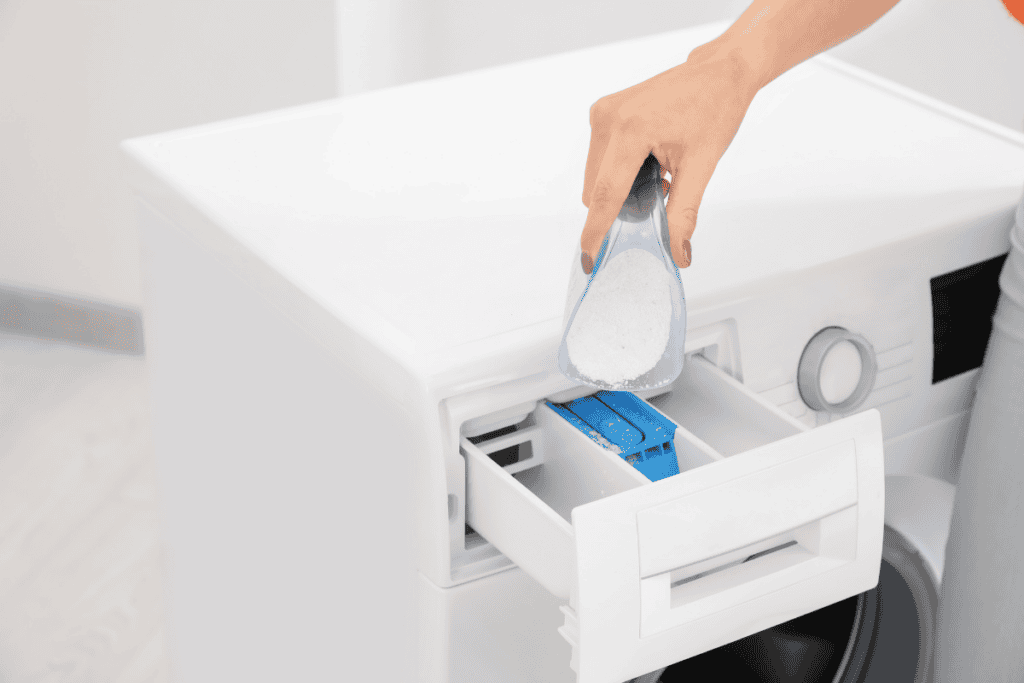
Over time, detergent can accumulate inside the dispenser compartment. Liquid detergent may leave a sticky coating, while powdered detergent can clump when exposed to moisture.
As residue builds up, it may restrict the passages that allow water to move through the dispenser and carry detergent into the drum.
Common signs of detergent buildup include:
- Detergent remaining in the drawer after a completed cycle
- Thick residue around the dispenser compartment
- Powdered detergent forming hardened clumps
- Water collecting in certain dispenser areas
- Detergent releasing inconsistently between loads
A useful first step is checking the accessible dispenser compartment for visible buildup.
Many washers have removable detergent drawers designed for routine cleaning. If your owner’s manual permits removal for maintenance, follow the manufacturer’s cleaning instructions and avoid using abrasive tools or harsh chemicals.
Troubleshooting Tip: Pay attention to whether the problem improves after routine dispenser cleaning. If detergent continues collecting in the drawer, restricted water flow or a malfunctioning component may be responsible.
2. The Wrong Detergent or Too Much Detergent Is Being Used
Using the wrong detergent can affect how well a washing machine dispenses and distributes cleaning products.
High-efficiency washers generally require HE detergent, which is formulated to produce fewer suds. Using non-HE detergent or adding excessive amounts can create buildup and interfere with normal washing performance.
Detergent consistency also matters. Some concentrated liquids are thicker than standard formulas, while powdered detergents may not dissolve completely under certain conditions.
Signs detergent usage may be contributing include:
- Excessive suds during the wash cycle
- Sticky residue in the dispenser
- Detergent remaining after the cycle
- Clothing feeling soapy after washing
- Recurring buildup despite regular cleaning
Check your washer’s owner’s manual for the recommended detergent type and amount.
Some automatic dispensing systems also require specific detergent settings. For example, certain washers allow users to adjust detergent concentration or dispensing quantity.
Troubleshooting Tip: Confirm that you’re using the correct detergent compartment and following the manufacturer’s dosing recommendations. Adding more detergent does not necessarily improve cleaning and may contribute to buildup.
3. Water Is Not Reaching the Dispenser Properly
Water flow plays an important role in detergent dispensing.
On many washers, incoming water passes through the dispenser at specific points during the cycle. This helps carry detergent into the wash tub.
If the washer receives insufficient water or the flow through the dispenser is restricted, detergent may remain in the compartment.
Possible warning signs include:
- Detergent remaining in the drawer
- The washer taking longer than usual to fill
- Weak or inconsistent water flow during filling
- Water-related error messages
- Incomplete wash cycles
Low household water pressure can contribute to these symptoms. However, similar problems may occur when the washer’s internal water distribution system is malfunctioning.
Observe whether the washer fills normally and whether any error messages appear on the control panel.
If filling is unusually slow or detergent repeatedly remains in the dispenser, professional diagnosis may be necessary to identify the source of the water-flow problem.
4. The Dispenser Drawer or Mechanism Is Malfunctioning
Sometimes, the problem involves the dispenser assembly itself.
The dispenser drawer contains compartments designed to hold detergent, fabric softener, and other laundry additives until the appropriate stage of the wash cycle.
If a compartment is damaged, obstructed, or improperly positioned, detergent may not release as intended.
Some washing machines also use diverter mechanisms or automatic dosing systems that control when detergent enters the wash.
Symptoms of a dispenser-related problem may include:
- Detergent collecting in one compartment
- A drawer that does not close properly
- Visible cracks or damage around the dispenser
- Inconsistent dispensing despite normal water filling
- Automatic dispensing warnings on supported models
If your washer uses an automatic detergent dispenser, review its settings and any messages indicating that detergent needs to be refilled or dispensing has been disabled.
Different manufacturers use different dispenser designs, so maintenance requirements vary by model.
When a dispenser mechanism or automatic dosing component fails, a qualified technician can determine whether the affected assembly requires replacement.
5. A Faulty Water Inlet Valve
If your washer is not dispensing detergent even though the dispenser is clean and the settings are correct, the water inlet valve may be responsible.
The water inlet valve regulates the flow of water entering the washer. On models with multiple valve circuits, a failure may prevent water from reaching a particular dispenser compartment even when other washing functions operate normally.
Signs of a possible inlet valve problem include:
- One detergent compartment consistently failing to empty
- Water entering the washer normally during some cycle stages but not others
- Inconsistent detergent dispensing despite a clean drawer
- Water-fill error codes appearing during operation
A faulty valve can sometimes affect detergent delivery without causing an obvious problem with every wash function.
Because the inlet valve contains electrical components and connects to the appliance’s water supply, diagnosis and replacement should be performed by a professional.
A technician can determine whether the valve is malfunctioning or whether another component is preventing the dispenser from receiving water.
6. An Electronic Control Problem Is Interrupting Dispensing
Modern washing machines rely on electronic controls to coordinate water filling, detergent dispensing, agitation, and other cycle functions.
If the control board fails to activate the appropriate valve or dispensing mechanism at the correct time, detergent may remain in its compartment.
Electronic faults are generally less common than residue buildup or water-flow problems, but they can affect dispensing on certain models.
Warning signs may include:
- Detergent remaining despite normal dispenser maintenance
- Intermittent dispensing problems
- Unusual control panel messages
- Wash cycles that pause unexpectedly
- Multiple functions behaving inconsistently
If detergent dispensing problems occur alongside unexpected cycle interruptions, the issue may involve the washer’s water management or electronic controls.
Our guide on a Samsung washer that stops mid-cycle explains other conditions that can interrupt washing.
A qualified technician can determine whether an electronic component is responsible. Avoid accessing internal wiring or control boards.
When to Schedule Professional Washer Repair
If you’re dealing with a washer not dispensing detergent even after cleaning the dispenser and checking the recommended settings, professional service may be necessary.
Persistent dispensing failures, water-related error messages, or unusual cycle behavior may indicate a problem that requires specialized diagnosis.
Athens Appliance Repair can help identify the underlying issue and recommend the appropriate solution. Our technicians provide professional washer repair to help restore reliable washing performance and keep your laundry routine running smoothly.