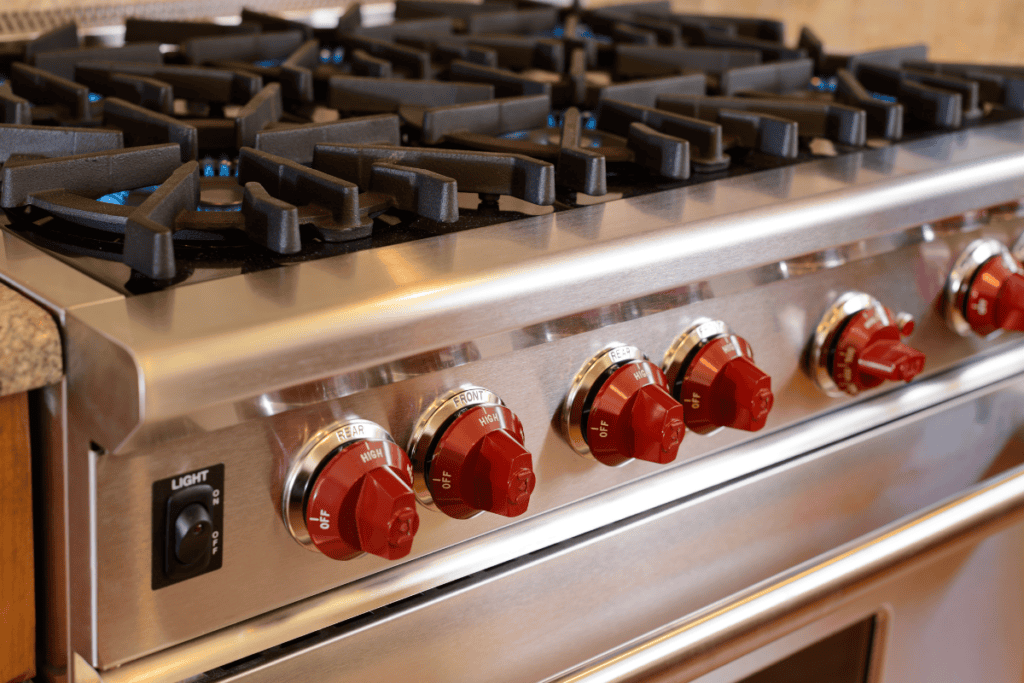
If your stove burner won’t stop clicking, the ignition system is continuing to create a spark when it normally should have stopped.
A few clicks when you turn on a gas burner are normal because the spark helps ignite the gas. Constant clicking after the burner lights, clicking when the burner is off, or repeated clicking without ignition can signal a problem.
The timing of the clicking and how the burner behaves can provide some useful clues about what is causing it.
Common Causes When a Stove Burner Won’t Stop Clicking
A stove burner won’t stop clicking for several possible reasons, ranging from moisture around the burner to a problem with an ignition component.
Understanding why a stove burner won’t stop clicking can help narrow down the possible cause.
1. Moisture Around the Burner or Ignition System
Did the clicking start shortly after a spill, boil-over, or cooktop cleaning? Moisture may be the reason.
Water around the burner or ignition components can interfere with the ignition system and cause continued sparking. Even a small amount of moisture in the wrong place can affect how the system operates.
Once the cooktop is cool, you can wipe away visible moisture from accessible surfaces with a clean, dry cloth. Allowing the area to dry naturally may also help if the clicking started immediately after cleaning or a spill.
If the burner area is completely dry and the clicking continues, moisture may not be the only issue. The next place to look is the burner itself.
2. The Burner Cap Is Not Seated Correctly
The burner cap does more than provide a finished surface over the burner. Its position can affect how the burner ignites and how the flame interacts with the ignition system.
On some stove models, a burner cap that is crooked or incorrectly seated can contribute to continuous sparking. Once the cooktop is cool, check that the removable cap sits flat and is positioned according to the manufacturer’s instructions.
Also look for accessible food residue around the burner that could prevent the cap from sitting correctly. Surface-level buildup can be wiped away without opening or disassembling the appliance.
If the burner cap is clean and correctly positioned but the clicking persists, the problem may be within the ignition system itself.
3. A Damaged or Worn Spark Electrode
That familiar clicking sound comes from the stove’s ignition system creating a spark. The spark electrode is the component that delivers the spark used to ignite the gas at the burner.
If an electrode becomes damaged or worn, it may not create the strong, properly positioned spark needed for reliable ignition. A burner that repeatedly clicks but struggles to light can be one sign of an electrode problem.
A professional can determine whether the electrode itself is faulty or another part of the ignition system is responsible.
Sometimes, however, the electrode is doing exactly what it is being told to do. The real problem is that another component keeps telling it to spark.

4. A Faulty Spark Ignition Switch or Switch Harness
If the clicking continues even when the burner should no longer be trying to ignite, the spark ignition switch is an important possibility.
When you turn a burner control to the ignition position, the ignition switch signals the spark module so the system can generate a spark. If the switch contacts become stuck in a closed position, the module may continue receiving voltage even though you are no longer trying to ignite the burner.
Moisture affecting the switches can produce similar behavior. This is one reason the timing of the problem matters. Clicking that suddenly appears after a spill may have a different cause than clicking that begins without an obvious event.
Because diagnosing a switch or switch harness involves internal electrical components, this is a job for a trained appliance technician.
If the switch is functioning correctly, the component responsible for supplying power to the electrodes may be the cause.
5. A Failed Spark Module
The spark module supplies power to the surface burner spark electrodes. A malfunctioning module can cause burners to spark continuously.
One useful detail is that a spark module should not automatically be blamed whenever a stove keeps clicking. Repair Clinic notes that the spark ignition switch is generally more likely to be responsible for continuous sparking than the spark module.
That distinction is important because several ignition problems can create nearly identical symptoms from the outside. Professional diagnosis can identify which component has actually failed instead of replacing parts based on the clicking sound alone.
If you’ve also noticed longer heating times, learn why your oven is slow to preheat and what could be causing the delay.
Helpful Troubleshooting Tips for a Clicking Stove Burner
You can learn quite a bit about a clicking burner simply by paying attention to when the sound occurs and how the stove behaves. These observations can also give a technician valuable information when diagnosing the appliance.
- Notice when the clicking happens. Does it stop after the burner lights, continue while the flame is burning, or occur when the burner controls are off? Continuous clicking outside the normal ignition process can point toward an ignition-system problem.
- Determine whether one or multiple burners are affected. If only one burner is having trouble, the problem may be associated with components serving that burner. If several burners spark unexpectedly, a shared ignition component may be involved.
- Think about when the problem started. Clicking that begins immediately after cleaning, a spill, or a boil-over makes moisture particularly relevant.
- Check the burner cap when the stove is cool. Make sure removable burner caps sit flat and are positioned according to the manufacturer’s instructions.
- Clean accessible residue. Once the cooktop is cool, wipe away visible food residue or moisture around the burner and cap without opening panels or accessing internal components.
- Pay attention to how the burner lights. A burner that establishes a normal flame and then keeps clicking presents a different clue than a burner that repeatedly clicks but never ignites.
- Stop using the appliance if you smell gas. Do not attempt to inspect, test, or repair a gas line or gas component yourself. Follow appropriate emergency guidance and contact a qualified professional.
If the obvious surface-level causes have been ruled out, the ignition system should be professionally evaluated.
When Professional Repair Is Needed for a Stove Burner That Won’t Stop Clicking
If your stove burner won’t stop clicking after the accessible burner area is dry, clean, and correctly positioned, it may be time for professional diagnosis. The same is true if the problem repeatedly returns, the burner has difficulty lighting, several burners are affected, or clicking continues when the controls are no longer calling for ignition.
Persistent clicking can involve the spark electrode, ignition switch, switch harness, spark module, or another part of the burner ignition system. Because several of these components can create similar symptoms, accurately identifying the failed part matters.
A professional technician can diagnose the ignition system and determine what is causing the unwanted sparking without relying on guesswork. If you’re dealing with a clicking burner, schedule professional cooktop and oven repair to have the problem properly diagnosed and repaired.