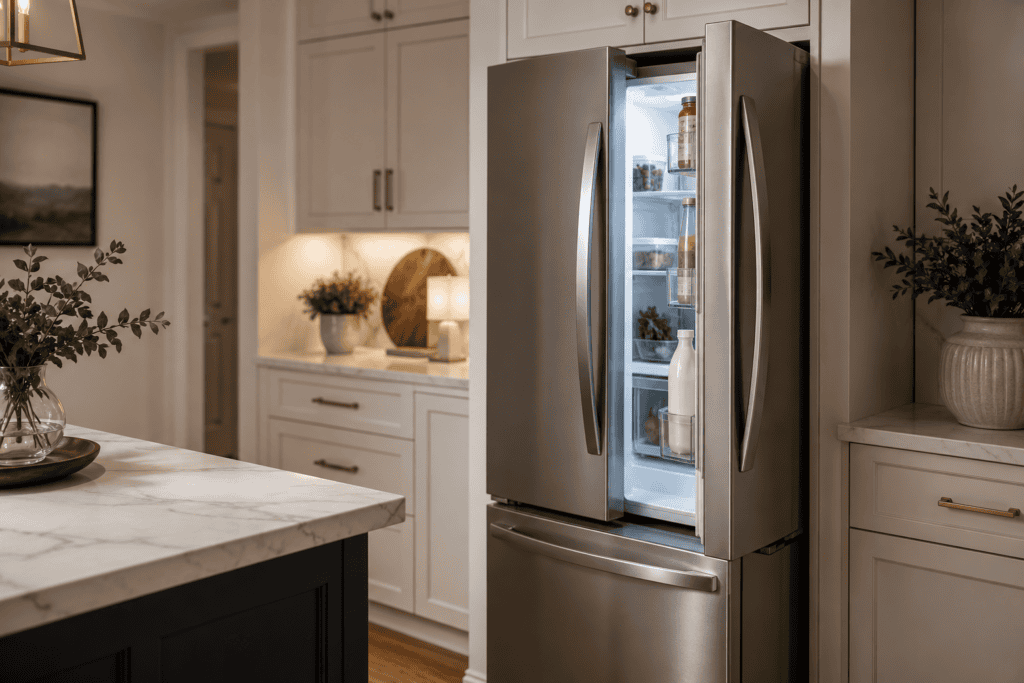
A refrigerator door not sealing is a common issue that can lead to food spoilage, temperature fluctuations, higher energy bills, and excessive strain on your appliance. When the refrigerator door cannot create a tight seal, cold air escapes while warm air enters, forcing the system to work harder to maintain proper temperatures.
Understanding what may be causing the problem can help you recognize early warning signs, protect food quality, and maintain consistent refrigerator performance.
Common Causes of a Refrigerator Door Not Sealing
A refrigerator door relies on several components working together to create an airtight seal. When any of these parts become damaged, worn, or misaligned, the door may not close completely.
Below are some of the most common reasons a refrigerator door may not be sealing properly.
Damaged Door Gasket
The door gasket is the flexible rubber seal that runs around the edge of the refrigerator door. Its job is to keep cold air inside the appliance while preventing warm air from entering.
Common signs of a damaged gasket include:
- Visible cracks, tears, or gaps
- Moisture forming around the door
- Excessive condensation inside the refrigerator
- The door feeling loose when closed
A damaged gasket is one of the most common causes of a refrigerator door not sealing. While cleaning the gasket may help if dirt is preventing proper contact, damaged seals typically require professional replacement.
If the gasket appears worn or damaged, a qualified technician can determine whether replacement is necessary and ensure the new seal fits properly.
Dirty Gasket Surfaces
Even when the gasket itself is in good condition, food residue, grease, and debris can interfere with its ability to create a complete seal.
You may notice:
- Sections of the gasket not sitting flush against the cabinet
- Sticky buildup along the seal
- Small gaps around portions of the door
Cleaning the gasket and surrounding contact surfaces with a soft cloth and mild cleaner may improve sealing performance.
If cleaning does not resolve the issue, there may be an underlying alignment or component problem that requires professional diagnosis.
Misaligned Refrigerator Door
A refrigerator door must sit evenly against the cabinet to create a consistent seal around the entire perimeter.
Signs of door alignment issues include:
- Uneven gaps around the door
- The door appearing tilted
- Difficulty opening or closing
- One corner sealing while another remains open
Door alignment problems can develop over time due to hinge wear, shifting components, or frequent heavy use.
Because proper door alignment often involves adjustments to hinges and mounting hardware, professional service is recommended when alignment issues are suspected.
Worn or Damaged Door Hinges
Door hinges support the weight of the refrigerator door and help maintain proper positioning during opening and closing.
When hinges become worn or damaged, you may notice:
- The door sagging
- Unusual noises when opening or closing
- Difficulty keeping the door fully shut
- Inconsistent sealing around the gasket
Worn hinges can place additional stress on the gasket and may eventually lead to more significant sealing problems.
If hinge wear is affecting door operation, a professional technician can inspect the components and recommend the appropriate repair.

Overloaded Door Shelves
The contents stored in door bins can have a surprising impact on sealing performance.
Heavy items placed in door shelves may:
- Pull the door slightly out of alignment
- Increase stress on hinges
- Prevent the door from closing completely
Milk containers, large beverage bottles, and other heavy items can gradually contribute to sealing problems over time.
Reducing excess weight in the door may help improve operation. If the door continues to sag or fail to seal properly, professional evaluation may be necessary.
Obstructions Preventing the Door from Closing
Items stored inside the refrigerator can occasionally interfere with proper door closure.
Common obstructions include:
- Food containers extending beyond shelf edges
- Large produce items pressing against the door
- Misplaced shelves or drawers
- Packaging that shifts when the door closes
Even a small obstruction can prevent the gasket from making full contact with the cabinet.
If removing potential obstructions does not resolve the problem, additional inspection may be needed to identify the underlying cause.
Helpful Troubleshooting Tips for a Refrigerator Door Not Sealing
If you have a refrigerator door not sealing properly, there are several helpful checks that may provide insight into the issue.
Consider the following:
- Look for visible cracks, tears, or gaps in the door gasket.
- Clean the gasket and cabinet contact surfaces to remove food residue and buildup.
- Check for containers, drawers, or shelves preventing the door from closing completely.
- Observe whether the door appears level when closed.
- Listen for unusual sounds that may indicate hinge wear.
- Watch for signs of excessive condensation or frost buildup inside the refrigerator.
If the problem persists after these checks, scheduling service is often the most effective way to prevent food spoilage and additional appliance strain.
Final Thoughts: Refrigerator Door Not Sealing
A refrigerator door not sealing properly can affect food preservation, energy efficiency, and overall refrigerator performance. Addressing sealing problems early can help prevent more extensive appliance damage and avoid unnecessary energy consumption.
If your refrigerator door continues to have trouble closing securely, the experienced Athens refrigerator repair experts can accurately diagnose the problem and recommend the appropriate solution.