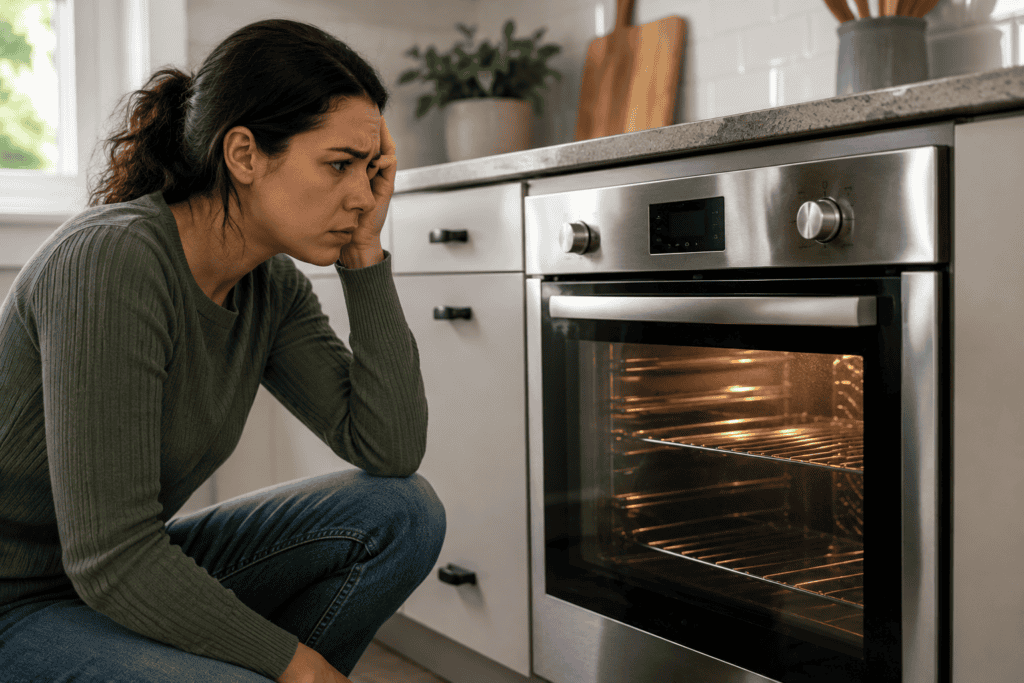
An oven slow to preheat is a common complaint among homeowners who notice their meals taking longer to cook or coming out inconsistently. When preheating slows down noticeably, it often means the oven is losing heat, producing less heat than it should, or misreading the temperature inside the cavity.
Understanding the possible causes can help explain why preheat times increase and what may be affecting your oven’s overall performance.
Common Causes of an Oven Slow to Preheat
An oven should generate heat steadily, retain it effectively, and regulate temperature with accuracy once it reaches the selected setting. When any part of that process is disrupted, preheating can take longer and cooking performance can become less predictable.
The issues below highlight the most common causes of an oven slow to preheat.
Faulty Bake Element
The bake element provides much of the heat used during preheating in an electric oven. If it weakens, the oven may still warm up, but take far longer to reach the selected temperature.
Signs may include:
- Longer preheat times
- Uneven baking
- Visible blistering or cracks on the element
- Food taking longer than recipes suggest
A weakened bake element can continue working poorly before it fails completely.
If the problem continues, a technician can test the element and determine whether replacement is needed.
Weak Igniter in a Gas Oven
In a gas oven, the igniter must get hot enough to safely light the burner and allow the oven to build heat. When it weakens, the burner may light late, heat output may lag, or the oven may struggle to reach the selected temperature.
Common signs include:
- Slow temperature rise
- Delayed ignition
- Inconsistent heating
- Longer cooking times
Gas oven ignition issues should always be handled by a qualified professional.
If these symptoms continue, service is recommended to diagnose the igniter and related components safely.
Malfunctioning Temperature Sensor
The temperature sensor monitors heat inside the oven and communicates with the control system. If it sends inaccurate readings, the oven may heat slowly, cycle incorrectly, or fail to maintain the right temperature.
You may notice:
- Extended preheat cycles
- Overcooked or undercooked food
- Temperature swings
- Cooking results that vary from one use to the next
Sensor issues can look similar to heating element or control problems.
Professional testing can confirm whether the sensor is accurate or another component is causing the delay.
Defective Oven Control Board
The control board manages oven functions, including heating cycles and temperature response. If it is not sending the correct signals, the oven may struggle to preheat properly.
Possible warning signs include:
- Slow preheating
- Error codes
- Inconsistent heating cycles
- Heating elements or burners not operating as expected
Control board problems can be complex and may require electrical testing. A professional technician should inspect the oven and verify whether the board or another component is responsible.

Damaged Door Gasket
The door gasket helps trap heat inside the oven cavity. If it is worn, cracked, or no longer sealing well, heat can escape and make the oven work harder to preheat.
Look for:
- Heat escaping around the door
- Longer preheat times
- Uneven cooking
- Higher energy use
A poor door seal can affect both preheating and cooking consistency. If the gasket is damaged, professional replacement can help restore heat retention.
Calibration Issues
An oven may seem slow because the displayed temperature does not match the actual temperature inside the cavity. Calibration issues can make preheating and cooking results feel unpredictable.
Signs may include:
- Recipes taking longer than expected
- Food browning unevenly
- Temperature readings that seem inaccurate
- Repeated cooking inconsistencies
If your oven is also producing inconsistent cooking results, explore our guide on why an oven may not cook evenly.
If you suspect calibration issues, professional evaluation can confirm whether calibration or another component issue is involved.
Troubleshooting Tips for an Oven Slow to Preheat
If your oven is slow to preheat, these practical checks can provide valuable clues about what may be contributing to the delay.
- Clear the oven cavity. Remove unused pans, baking sheets, foil liners, or cookware that may absorb heat or restrict airflow during preheating.
- Keep the door closed during preheat. Opening the oven door releases heat and can add several minutes to the preheat cycle.
- Inspect the door gasket visually. Look for cracks, gaps, loose areas, or flattened sections that may allow heat to escape.
- Compare the temperature with an oven thermometer. If the thermometer reading is much lower than the set temperature after preheating, the oven may have a sensor, calibration, or heating issue.
- Pay attention to heating patterns. Note whether slow preheating happens every time, only at higher temperatures, or only on bake, convection, or broil settings.
- Avoid overcrowding the racks. Large pans or packed racks can block airflow and make the oven heat less evenly.
- Clean heavy surface buildup. Excess grease or food debris can interfere with heat circulation and cause smoke or odors during heating.
If these steps do not improve preheat time, the problem likely involves a heating element, igniter, temperature sensor, door seal, or control component that should be diagnosed by a professional.
Oven Slow to Preheat: When to Contact a Professional
An oven that consistently takes too long to preheat is usually showing signs of a deeper performance issue. When slow heating continues across multiple uses, a technician can evaluate how well the oven is generating, measuring, and retaining heat.
Schedule service with the oven repair experts at Athens Appliance Repair for an accurate diagnosis and a reliable solution.